The Psychology of the Menu: How Restaurants Use Anchoring and Cognitive Bias to Shape What You Order

You sit down at a restaurant, open the menu, and within minutes you’ve made a decision that feels entirely your own. But is it? Behind that laminated card — or that sleek leather-bound booklet — lies a carefully engineered psychological landscape. Restaurateurs, menu consultants, and behavioral economists have spent decades studying how the human brain reads, evaluates, and chooses from a list of options. The result is a discipline sometimes called menu engineering, and at its heart are two powerful forces: anchoring and a constellation of cognitive biases that quietly steer your hand toward the dishes that make the restaurant the most money.

The Anchor and the Illusion of Value

Anchoring is one of the most robust findings in behavioral economics, first documented by Daniel Kahneman and Amos Tversky in the 1970s. The principle is simple: the first number you encounter in a comparison sets a psychological “anchor” against which all subsequent numbers are judged — often irrationally.

In a restaurant context, this means that a $75 Wagyu steak at the top of a steakhouse menu is not necessarily there because the chef expects you to order it. It is there to make the $42 ribeye feel like a bargain. The $75 item is a decoy, an anchor that recalibrates your internal sense of what is “reasonable” to spend. After seeing the high anchor, spending $42 feels restrained and sensible, even if you walked in expecting to spend $28.

The French Laundry in Napa Valley has long used this principle masterfully. Their prix-fixe tasting menus — routinely priced above $350 per person before wine — serve as a high anchor for the entire dining experience. A guest considering the wine list, which might otherwise seem expensive in isolation, feels relatively at ease spending $120 on a bottle, because the frame of reference has already been established at a much higher level.

In a more everyday setting, chains like The Cheesecake Factory in the United States famously feature menus that run to over 200 items, with prices spanning an enormous range. Researchers from Cornell’s Center for Hospitality Research have noted that this breadth creates multiple anchors at once, making the mid-tier options — which carry the best margins — feel like the sweet spot.

Placement and the “Golden Triangle”

Before a diner even reads prices, their eyes have already done the work of deciding what matters. Eye-tracking studies conducted at Cornell University and by menu consultancy firms in Europe reveal a consistent pattern: when presented with a single-page menu, the eye first travels to the upper right corner, then the top center, then back to the left. This path has been dubbed the Golden Triangle.

Items placed in the Golden Triangle receive disproportionately high attention and are ordered more frequently. Restaurants that understand this place their highest-margin dishes — not necessarily their most expensive ones — in these zones. At Nobu, the upscale Japanese-Peruvian chain with locations from London to Dubai, the menu is structured so that signature dishes like black cod with miso appear in visually prominent positions, reinforcing both the brand identity and the kitchen’s profitability.

For multi-page or booklet-format menus, the same logic applies to the inside right page of the opening spread, which receives the highest dwell time.

The Decoy Effect: Making the Middle Feel Right

The decoy effect — also called the asymmetric dominance effect — is one of the most elegant cognitive biases at work in menu design. It works like this: when given two options, people often find them genuinely difficult to compare. But introduce a third option that is clearly inferior to one of the first two (but not the other), and suddenly the “superior” option feels like an obvious choice.

Consider a simple drinks menu:

  • House wine: ₹600
  • Mid-range wine: ₹950
  • Premium wine: ₹1,800

The mid-range wine at ₹950 is hard to evaluate on its own. But if it is described as coming from a prestigious region, aged for a specific number of years, and paired with a tasting note — while the house wine has no description at all — the mid-range becomes the “reasonable” choice. The ₹1,800 bottle serves as the high anchor, the ₹600 bottle serves as the decoy making the house option feel unambitious, and the ₹950 bottle sells itself.

Dishoom, the beloved Bombay-inspired restaurant group in the UK, uses this framework with their drinks and small plates menus. Their menu descriptions are so vivid and atmospheric for certain items that the moderately priced options feel richly justified, while cheaper alternatives seem sparse by comparison.

Charm Pricing and the Magic of .99 — And Why Fine Dining Abandons It

Walk into a McDonald’s anywhere in the world and you will see prices ending in .99 or .49. Walk into a Michelin-starred restaurant and you will see round numbers: 48, 95, 120. This is not accidental.

Charm pricing — the practice of ending prices in .99 — exploits the left-digit anchoring effect. Because we read left to right, the brain registers ₹499 as “four hundred and something” before it finishes processing the full number, making it feel meaningfully cheaper than ₹500. Fast food chains and mid-market restaurants worldwide use this technique to drive volume on lower-ticket items.

But upscale restaurants deliberately do the opposite. Round numbers project confidence, quality, and the sense that the establishment is above the indignity of nickel-and-diming. Research published in the Journal of Consumer Psychology found that rounded prices increase the perception of luxury and craftsmanship, because they suggest the price was set based on value, not optimization. El Celler de Can Roca in Girona, Spain — regularly ranked among the world’s best restaurants — uses round pricing throughout, reinforcing the idea that you are paying for an experience, not a transaction.

Removing Currency Symbols: Spending Without Pain

One of the subtlest tricks in upscale menu design is the removal of the currency symbol entirely. Instead of “$42,” the menu reads simply “42.” This is not an oversight. Research from Cornell’s Center for Hospitality Research, led by Professor Sheryl Kimes, demonstrated that diners who were shown menus without dollar signs spent significantly more than those who saw prices with the symbol. The dollar sign — or any currency symbol — is what researchers call a “pain of paying” trigger. It reminds the diner that money is changing hands.

Luxury hotels and restaurants in Tokyo, Paris, and New York have adopted this technique widely. Le Bernardin in New York City, one of the most decorated French seafood restaurants in the world, presents many of its tasting menu options simply as numerals, divorced from the transactional reality of what is being spent.

Descriptive Language and the Halo Effect

Menu descriptions are not merely informative — they are persuasive architecture. A study by Professor Brian Wansink at Cornell found that menu items with descriptive labels (“Grandma’s zucchini cookies,” “succulent Italian seafood filet”) were rated as tasting better and were ordered 27% more often than the same items with plain names.

The halo effect is at play here: a vivid, evocative description creates a positive impression that spills over into how the actual dish is perceived. Geographic cues are particularly powerful. “French Dijon mustard” sounds more authoritative than “mustard.” “Hand-rolled pasta from Emilia-Romagna” commands a higher perceived value than “fresh pasta.”

Ottolenghi restaurants in London are a masterclass in this technique. Their menu descriptions are almost literary — listing origins, techniques, and sensory cues in a way that makes each dish feel like a considered act of culinary geography. Diners don’t just order; they feel they are making an informed and sophisticated choice.

In contrast, Din Tai Fung, the Taiwanese dumpling chain with outposts across Asia, Australia, and the United States, takes the opposite approach. Their menus are deliberately spare and photographic, relying on visual anchoring rather than language. A full-color image of a perfectly pleated xiao long bao creates an aspirational visual anchor that words could barely match.

Scarcity and Social Proof: The Power of “Chef’s Selection”

Scarcity bias — the tendency to assign more value to things that seem rare or limited — is activated in menus through phrases like “available today only,” “limited seasonal preparation,” or “chef’s recommendation.” These signals tell the brain that the opportunity cost of not ordering is high.

At Noma in Copenhagen, the concept of hyper-seasonal, foraged menus was not just a culinary philosophy but a masterful scarcity signal. The impossibility of having the same dish twice created extraordinary demand and legendary waiting lists, demonstrating that perceived scarcity can be a restaurant’s most powerful marketing tool.

Social proof operates similarly. A label reading “Most Popular” or “Guest Favourite” beside a dish exploits our tendency to trust the collective judgment of others, particularly when we feel uncertain. TGI Fridays and Applebee’s in the United States use this technique extensively on their tabletop displays, and the technique has migrated to digital menus through platforms like Zomato and Swiggy in India, which show “Bestseller” badges on high-converting items — a mechanism that generates feedback loops of popularity.

The Box and the Border: Visual Isolation

On any restaurant menu, a dish placed inside a box or highlighted with a border draws the eye like a spotlight. This technique exploits the Von Restorff effect (also called the isolation effect), a well-documented cognitive bias that holds that people are more likely to remember — and select — items that stand out from their surroundings.

Menu designers at firms like Gregg Rapp Menu Engineering in the United States counsel their restaurant clients to box no more than one or two items per section, because overuse dilutes the effect entirely. The boxed item is invariably a high-margin dish that the restaurant wants to move.

Hard Rock Cafe, which operates across dozens of countries from Mumbai to Milan, uses graphic design elements to create visual hierarchy on their menus, guiding international guests toward signature burgers and shareable platters that drive the highest per-table revenue.

The Length of the Menu: Paradox of Choice

Barry Schwartz’s paradox of choice — the finding that more options can produce less satisfaction and more decision paralysis — has had a measurable impact on modern menu design. In the aftermath of the COVID-19 pandemic, restaurants around the world dramatically trimmed their menus, and many discovered to their surprise that sales held steady or increased, food waste dropped, and kitchen efficiency improved.

Gordon Ramsay famously advocated for shorter menus throughout his career and television work, arguing that a focused menu signals mastery rather than compromise. Sketch in London, the avant-garde restaurant and art space, structures its menus as curated experiences in each of its rooms rather than exhaustive lists, turning the constraint itself into a form of theatre.

In Japan, the tradition of ichiju sansai — one soup and three sides — reflects a cultural philosophy of restraint that happens to sidestep the paradox of choice entirely. Restaurants in Kyoto serving kaiseki cuisine operate on similar principles: the chef decides, and the decision is trusted implicitly.

Digital Menus and the New Frontier of Bias

The migration to QR-code menus and digital ordering — accelerated by the pandemic — has opened new frontiers for behavioral design. Platforms can now A/B test menu layouts in real time, serve different menus to different demographic groups, and use machine learning to identify which visual arrangements drive the highest average order values.

McDonald’s uses dynamic digital menu boards in many of its markets that change based on time of day, weather, and even traffic patterns, showing breakfast items in the morning and automatically surfacing high-margin upsell combinations at peak dinner times. This is anchoring at algorithmic scale.

In India, platforms like Swiggy Instamart and restaurant-facing tools from Zomato allow operators to configure “sponsored” or “promoted” placements for items within the digital menu, essentially monetizing the Golden Triangle principle in a new medium.

The Menu as a Mirror

Every menu is a map of a restaurant’s ambitions, margins, and understanding of human psychology. The finest examples — from the handwritten blackboard specials of a Paris bistro to the leather-bound folio of a Tokyo tasting counter — are works of design that balance beauty, clarity, and careful behavioral engineering.

For diners, awareness of these techniques does not diminish the pleasure of eating out. If anything, it enriches the experience: to know that the perfectly placed item, the evocative description, and the well-judged anchor are all working in concert is to appreciate that a great meal begins before the first bite is taken. It begins the moment your eyes fall on the page.

References draw on research from Cornell University’s Center for Hospitality Research, the work of Daniel Kahneman and Amos Tversky on anchoring, Brian Wansink’s studies on menu language (Cornell), Barry Schwartz’s “The Paradox of Choice,” and menu engineering principles developed by Gregg Rapp and other industry consultants.

The History of Idli and Dosa: A Culinary Journey

Idli and dosa are two of the most iconic dishes in South Indian cuisine, enjoyed not only in India but also across the globe. Their origins are deeply rooted in the culinary and cultural history of South India, with debates and theories surrounding their evolution. Below is a detailed exploration of their history, supported by references and scholarly insights.

Origins of Idli

  1. Ancient Roots:
  • The exact origin of idli is debated, but it is widely believed to have evolved over centuries. One popular theory suggests that idli was introduced to South India by Indonesian traders around 800–1200 CE. The Indonesian dish kedli, a similar fermented rice cake, is often cited as a possible precursor.
  • Food historian K.T. Achaya, in his book Indian Food: A Historical Companion (1994), notes that the fermentation process used in idli-making was likely influenced by foreign culinary practices, possibly from Indonesia.
  1. Early Mentions:
  • The earliest mention of idli-like dishes in Indian literature appears in the Kannada work Vaddaradhane by Shivakotiacharya (920 CE), which describes a dish called iddalige, made from a batter of urad dal (black gram) and rice.
  • Another reference is found in the 12th-century Sanskrit text Manasollasa, written by the Chalukya king Someshvara III. The text describes a dish called iddarika, which is similar to modern-day idli.
  1. Evolution:
  • Over time, idli evolved into its current form, with the fermentation process becoming a key feature. The use of rice and urad dal in specific proportions, along with steaming, became standardized in South Indian households.

Origins of Dosa

  1. Ancient Beginnings:
  • Dosa, like idli, has ancient roots. It is believed to have originated in the Tamil region of South India. The earliest mention of dosa can be traced back to the Sangam literature (300 BCE–300 CE), where it is referred to as dosai.
  • The Tamil text Perumpanuru describes a dish made from rice and lentils, which is believed to be an early version of dosa.
  1. Medieval Period:
  • By the medieval period, dosa had become a staple in South Indian cuisine. The 12th-century text Manasollasa also mentions a dish called doshaka, which is thought to be an early form of dosa.
  • The use of fermentation in dosa batter, similar to idli, became common during this period, giving the dish its characteristic texture and flavor.
  1. Modern Variations:
  • Over time, dosa evolved into various forms, including masala dosa, which is stuffed with spiced potatoes. The masala dosa is said to have originated in Udupi, Karnataka, in the early 20th century and gained popularity across India.

Cultural Significance

  • Idli and dosa are not just food items but are deeply embedded in South Indian culture. They are often associated with breakfast and are a staple in traditional South Indian meals.
  • The fermentation process used in both dishes is considered healthy and probiotic, contributing to their popularity as nutritious foods.

References

  1. Achaya, K.T. (1994). Indian Food: A Historical Companion. Oxford University Press.
  2. Shivakotiacharya. (920 CE). Vaddaradhane (Kannada text).
  3. Someshvara III. (12th century). Manasollasa (Sanskrit text).
  4. Sangam Literature (300 BCE–300 CE). Perumpanuru (Tamil text).

In a nutshell

The history of idli and dosa reflects the rich culinary heritage of South India, influenced by trade, cultural exchanges, and regional innovations. From their ancient origins to their modern-day popularity, these dishes continue to be a symbol of South Indian cuisine, cherished for their simplicity, nutrition, and versatility.

Image Credit : Photo by sarthak

Pua: The Quintessential Holi Delight

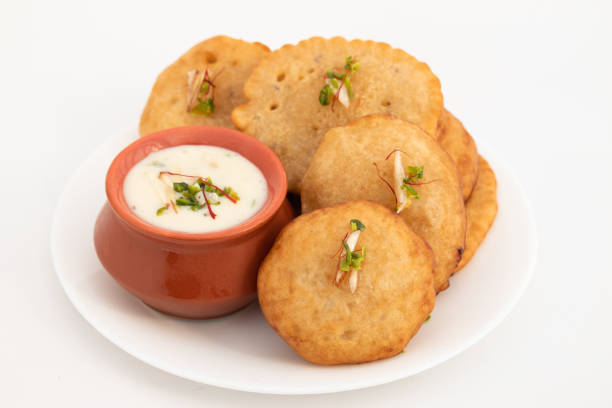
Holi, the festival of colors, is a vibrant celebration that marks the arrival of spring and the triumph of good over evil. It is a time when families and friends come together to revel in joy, play with colors, and indulge in an array of delectable treats. Among the many traditional dishes prepared during Holi, one stands out as a universal favorite—Pua. This sweet, deep-fried delicacy holds a special place in the hearts of Holi celebrants across India, especially in the northern regions.

The Origins of Pua

Pua, also known as malpua in some regions, has a rich history that dates back centuries. It is believed to have originated in the Indian subcontinent and has been mentioned in ancient texts and scriptures. The dish is often associated with religious offerings and festivals, making it an integral part of Hindu culture. Over time, Pua has evolved, with each region adding its unique twist to the recipe.

The Art of Making Pua

The preparation of Pua is a labor of love, requiring a blend of simple ingredients and meticulous technique. The basic ingredients include flour (usually wheat or refined flour), sugar, milk, and ghee (clarified butter). Some variations also incorporate semolina (sooji), fennel seeds, and cardamom for added flavor and texture.

The process begins by creating a thick batter using flour, milk, and a pinch of sugar. The batter is then left to rest, allowing the flavors to meld. Once ready, small portions of the batter are poured into hot ghee and deep-fried until golden brown. The fried Puas are then dipped in a sugar syrup infused with cardamom or saffron, giving them their characteristic sweetness and aroma.

Regional Variations

While the basic recipe remains consistent, Pua enjoys a variety of regional interpretations. In Bengal, for instance, it is known as malpua and is often served with rabri (a thickened, sweetened milk dish). In Odisha, Pua is a popular offering to the gods during festivals and is made with a mix of rice flour and jaggery. In Uttar Pradesh and Bihar, it is commonly prepared during Holi and is sometimes garnished with chopped nuts for added richness.

Pua and Holi: A Perfect Pair

Pua’s association with Holi goes beyond its delicious taste. The dish symbolizes the sweetness and joy of the festival. As families gather to celebrate, the aroma of Pua frying in ghee fills the air, creating a sense of warmth and togetherness. It is often served alongside other Holi specialties like gujiyas, thandai, and dahi bhalle, making it an essential part of the festive feast.

Moreover, Pua’s simplicity and versatility make it a favorite among home cooks. It requires no fancy ingredients or elaborate techniques, yet it never fails to impress. Whether enjoyed hot and crispy or soft and syrup-soaked, Pua is a treat that appeals to all ages.

A Dish That Bridges Generations

One of the most beautiful aspects of Pua is its ability to bring people together. The process of making Pua is often a family affair, with elders passing down their secret recipes and techniques to the younger generation. As children gather around the kitchen, eagerly waiting to taste the first batch, they are not just learning how to make a dish—they are inheriting a piece of their cultural heritage.

Conclusion

Pua is more than just a dish; it is a symbol of tradition, love, and celebration. As Holi approaches, the sight of golden Puas sizzling in ghee and the sound of laughter echoing through homes serve as a reminder of the festival’s true essence—joy, togetherness, and the sweetness of life. So, this Holi, as you immerse yourself in the colors and festivities, don’t forget to savor a piece of Pua, the timeless delight that has been gracing Holi celebrations for generations.

Exploring the World of Tea: A Journey Through Different Varieties

Tea is one of the most beloved beverages in the world, enjoyed by millions for its flavor, aroma, and health benefits. From the lush tea gardens of Asia to the bustling markets of the Middle East, tea has a rich history and cultural significance in many regions. With countless varieties to choose from, each type of tea offers a unique experience. Let’s take a journey through some of the most popular and distinctive teas from around the world.

1. Green Tea (China, Japan, and Beyond)

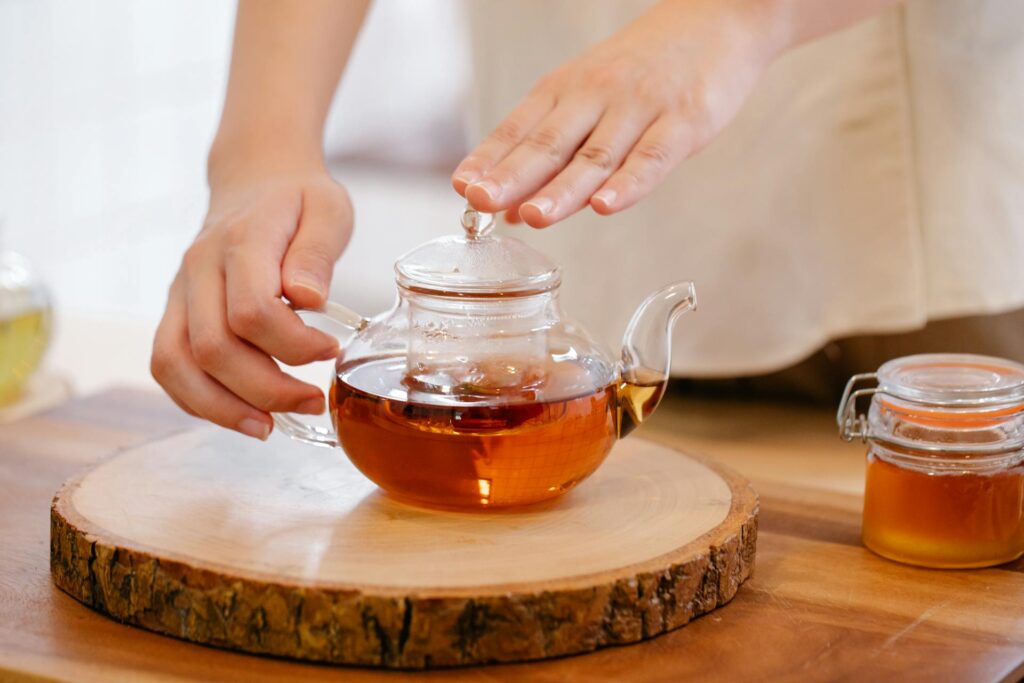
Green tea is one of the most widely consumed teas globally, known for its fresh, grassy flavor and numerous health benefits. It is made from unoxidized tea leaves, which retain their natural green color and antioxidants.

tea cup with tea leaves
  • Chinese Green Tea: Varieties like Longjing (Dragon Well) and Biluochun are celebrated for their delicate, nutty, and slightly sweet flavors.
  • Japanese Green Tea: Matcha, a powdered green tea, is famous for its vibrant color and use in traditional tea ceremonies. Sencha and Gyokuro are other popular Japanese green teas, each with a distinct umami flavor.

2. Black Tea (India, Sri Lanka, and Beyond)

Black tea is fully oxidized, giving it a robust, bold flavor and dark color. It is a staple in many cultures, often enjoyed with milk and sugar.

  • Indian Black Tea: Assam tea, grown in the northeastern region of India, is known for its malty, strong flavor. Darjeeling, often called the “Champagne of Teas,” has a lighter, floral taste.
  • Sri Lankan Black Tea: Ceylon tea, from Sri Lanka, is prized for its bright, citrusy notes and versatility.
  • English Breakfast Tea: A classic blend of black teas, often including Assam, Ceylon, and Kenyan teas, it’s a hearty choice for starting the day.

3. Oolong Tea (China and Taiwan)

Oolong tea is partially oxidized, placing it somewhere between green and black tea in terms of flavor and color. Its taste can range from light and floral to rich and toasty.

  • Chinese Oolong: Tieguanyin (Iron Goddess of Mercy) is a famous oolong with a floral aroma and smooth finish.
  • Taiwanese Oolong: High Mountain Oolong, grown in the mountains of Taiwan, is celebrated for its creamy texture and sweet, fruity notes.

4. White Tea (China)

White tea is the least processed of all teas, made from young tea leaves and buds. It has a delicate, subtle flavor and is often described as light and refreshing.

  • Silver Needle: Made exclusively from young tea buds, this tea is highly prized for its sweet, floral taste.
  • White Peony: A blend of buds and leaves, it offers a slightly stronger flavor than Silver Needle but remains delicate.

5. Pu-erh Tea (China)

Pu-erh is a unique fermented tea from China’s Yunnan province. It can be aged for years, even decades, developing a deep, earthy flavor over time. Pu-erh is often compressed into cakes or bricks and is believed to aid digestion.

  • Raw Pu-erh: Light and floral when young, it develops complexity as it ages.
  • Ripe Pu-erh: Accelerated fermentation gives it a rich, earthy flavor, often compared to damp soil or mushrooms.

6. Herbal Teas (Global)

Herbal teas, or tisanes, are not made from the tea plant (Camellia sinensis) but from a variety of herbs, flowers, and spices. They are naturally caffeine-free and come in a wide range of flavors.

  • Chamomile: Known for its calming properties, chamomile tea has a mild, apple-like flavor.
  • Peppermint: Refreshing and invigorating, peppermint tea is a popular choice for digestion and relaxation.

Peppermint Tea

  • Rooibos: Native to South Africa, rooibos tea has a sweet, nutty flavor and is rich in antioxidants.
  • Hibiscus: Bright red and tart, hibiscus tea is often enjoyed iced and is popular in regions like Egypt and Mexico.

Hibiscus Tea

7. Chai (India)

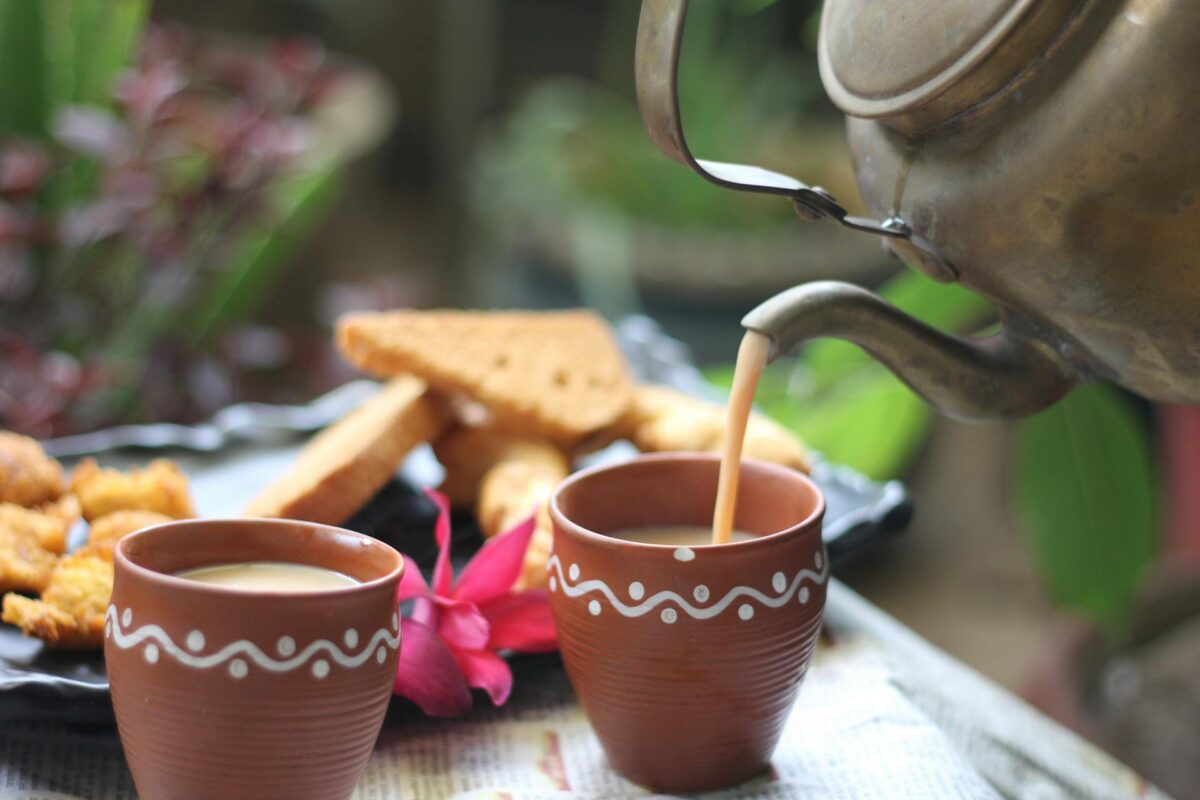
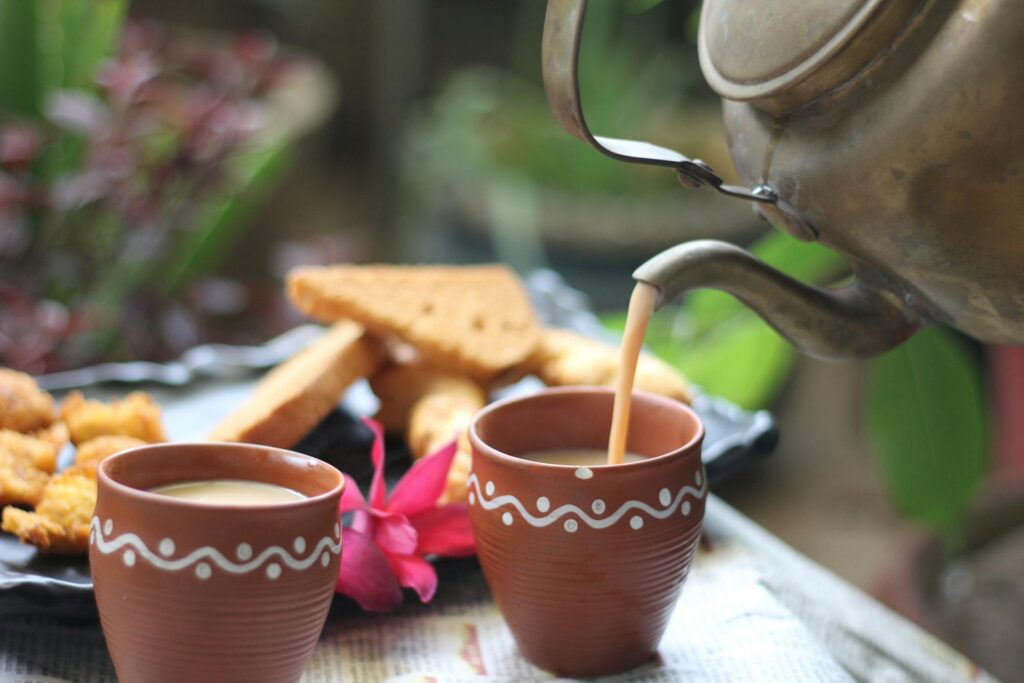
Chai, or masala chai, is a spiced tea made by brewing black tea with a mixture of aromatic spices like cardamom, cinnamon, ginger, and cloves. It is typically mixed with milk and sweetened with sugar, creating a rich, warming beverage that is a staple in Indian households.

Indian Tea

8. Yellow Tea (China)

Yellow tea is a rare and luxurious variety, similar to green tea but with an additional step of slow oxidation. It has a mellow, smooth flavor and a golden hue.

  • Junshan Yinzhen: Grown on Junshan Island in China, this tea is known for its sweet, delicate taste.
Yellow Tea

9. Mate (South America)

Yerba mate is a traditional South American tea made from the leaves of the yerba mate plant. It has a bold, earthy flavor and is often consumed from a hollow gourd with a metal straw called a bombilla. Mate is a social drink, commonly shared among friends and family in countries like Argentina, Uruguay, and Paraguay.

Yerba Mate Tea

10. Butter Tea (Tibet)

Butter tea, or po cha, is a unique Tibetan beverage made from tea leaves, yak butter, and salt. It is rich, creamy, and energizing, making it a vital part of the diet in the high-altitude regions of the Himalayas.

Butter Tea

11. Bubble Tea (Taiwan)

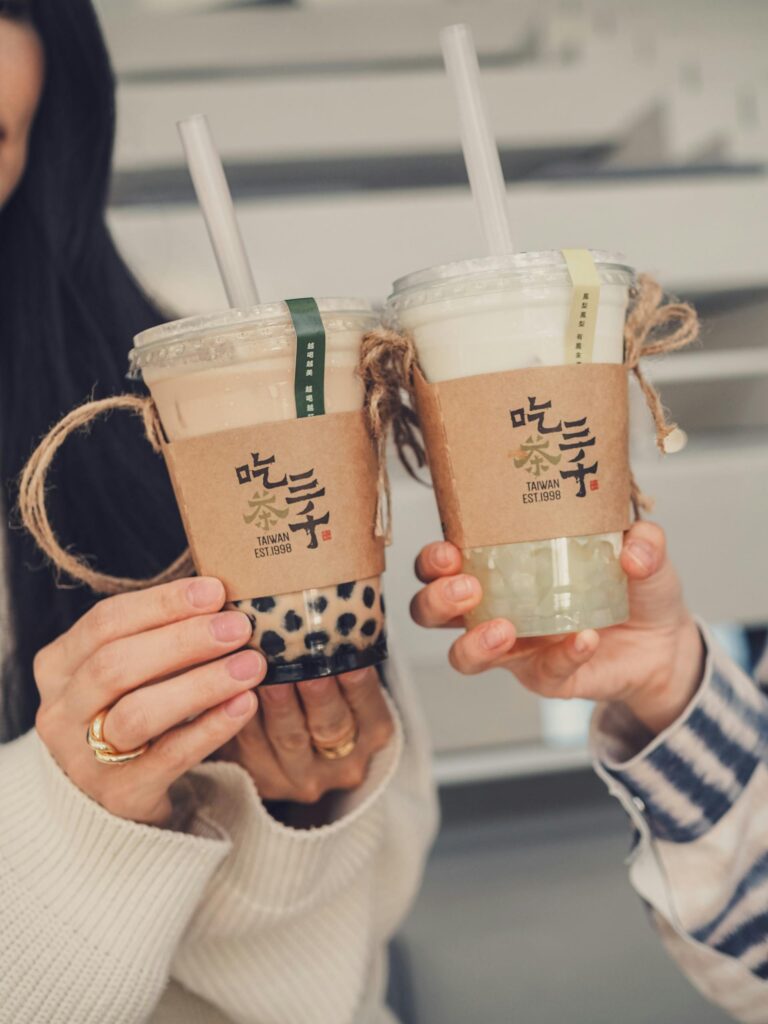
Bubble tea, or boba tea, is a modern tea-based drink that originated in Taiwan. It combines tea (often black or green) with milk, sweeteners, and chewy tapioca pearls. It has become a global phenomenon, with countless variations and flavors.

Bubble Tea

12. Earl Grey (Global)

Earl Grey is a classic flavored tea made by infusing black tea with bergamot oil, which gives it a distinctive citrusy aroma. It is enjoyed worldwide and often served with a slice of lemon or a splash of milk.

Earl Grey Tea

Final Thoughts

The world of tea is as diverse as the cultures that cherish it. From the delicate notes of white tea to the bold richness of black tea, and from the earthy depth of pu-erh to the refreshing zest of herbal infusions, there’s a tea for every palate and occasion. Whether you’re sipping a cup of matcha in Japan, enjoying a spicy chai in India, or relaxing with a soothing chamomile blend, tea offers a moment of connection, tradition, and tranquility. So, brew a cup, take a sip, and let the flavors transport you around the world. Cheers!

Image Credits

Franchising a Restaurant: A Pathway to Growth and Success

Franchising has become a popular business model in the restaurant industry, offering a unique opportunity for entrepreneurs to expand their brand while minimizing risk. By franchising a restaurant, business owners can leverage the efforts and investments of franchisees to grow their brand presence, increase revenue, and achieve scalability. This article explores the process of franchising a restaurant and highlights the key benefits of this business model.

What is Franchising?

Franchising is a business arrangement where the owner of a successful restaurant (the franchisor) grants the rights to operate under their brand name, trademarks, and business model to an independent operator (the franchisee). In exchange, the franchisee pays an initial franchise fee, ongoing royalties, and agrees to adhere to the franchisor’s operational standards and guidelines.

Steps to Franchise a Restaurant

Franchising a restaurant requires careful planning, legal compliance, and a proven business model. Below are the key steps to successfully franchise a restaurant:

1. Develop a Proven Business Model

Before franchising, ensure that your restaurant has a successful and replicable business model. This includes a strong brand identity, a unique selling proposition, and a track record of profitability. Franchisees will be more inclined to invest in a concept that has already demonstrated success.

2. Create a Franchise Business Plan

Outline your franchise strategy, including target markets, growth goals, and financial projections. This plan will serve as a roadmap for your franchising efforts and help attract potential franchisees.

3. Protect Your Intellectual Property

Register your trademarks, logos, and brand name to protect your intellectual property. This ensures that your brand identity remains consistent across all franchise locations.

4. Develop a Franchise Disclosure Document (FDD)

In many countries, including the United States, franchisors are required to provide a Franchise Disclosure Document (FDD) to potential franchisees. The FDD contains detailed information about the franchise opportunity, including fees, obligations, and financial performance representations.

5. Set Up Franchise Operations

Create standardized operating procedures, training programs, and support systems to ensure consistency across all franchise locations. This includes developing a comprehensive operations manual that covers everything from food preparation to customer service.

6. Comply with Legal Requirements

Consult with a franchise attorney to ensure compliance with local, state, and federal franchise laws. This includes drafting a franchise agreement that outlines the rights and responsibilities of both the franchisor and franchisee.

7. Market Your Franchise Opportunity

Promote your franchise opportunity through various channels, such as franchise expos, online listings, and social media. Highlight the benefits of joining your franchise system to attract qualified candidates.

8. Provide Ongoing Support

Offer continuous training, marketing support, and operational guidance to your franchisees. This helps maintain brand consistency and ensures the success of each franchise location.

Benefits of Franchising a Restaurant

Franchising offers numerous advantages for both franchisors and franchisees. Below are some of the key benefits of franchising a restaurant:

1. Rapid Expansion

Franchising allows restaurant owners to expand their brand quickly without the need for significant capital investment. Franchisees fund the opening of new locations, enabling the brand to grow at a faster pace.

2. Shared Risk

Since franchisees invest their own money to open and operate their locations, the financial risk is shared between the franchisor and franchisee. This reduces the burden on the franchisor and allows for more sustainable growth.

3. Increased Brand Recognition

As more franchise locations open, the brand gains greater visibility and recognition. This can lead to increased customer loyalty and a stronger market presence.

4. Steady Revenue Stream

Franchisors earn revenue through initial franchise fees, ongoing royalties, and other fees. This creates a steady income stream that can be reinvested into the business or used to support franchisees.

5. Local Expertise

Franchisees bring local market knowledge and connections, which can help the brand adapt to regional preferences and trends. This localized approach can enhance customer satisfaction and drive sales.

6. Operational Efficiency

Standardized processes and systems ensure consistency across all franchise locations. This improves operational efficiency and reduces the likelihood of errors or inconsistencies.

7. Motivated Franchisees

Franchisees are highly motivated to succeed since they have a personal investment in the business. This often leads to better customer service and higher performance compared to company-owned locations.

8. Scalability

Franchising provides a scalable business model that can be adapted to different markets and regions. This flexibility allows the brand to grow both domestically and internationally.

Final Thoughts

Franchising a restaurant is a powerful strategy for achieving rapid growth, increasing brand recognition, and generating steady revenue. By following a structured approach and providing ongoing support to franchisees, restaurant owners can build a successful franchise system that benefits both the franchisor and franchisees. With the right planning and execution, franchising can transform a local restaurant into a global brand.

References

  1. International Franchise Association (IFA). (n.d.). What is Franchising?
    https://www.franchise.org
  2. U.S. Small Business Administration (SBA). (n.d.). Franchise Your Business. https://www.sba.gov
  3. Entrepreneur. (n.d.). How to Franchise Your Business.
    https://www.entrepreneur.com
  4. Franchise Direct. (n.d.). The Benefits of Franchising Your Business.
    https://www.franchisedirect.com
  5. Federal Trade Commission (FTC). (n.d.). Franchise Rule Compliance Guide. https://www.ftc.gov

By leveraging the franchising model, restaurant owners can unlock new opportunities for growth and success while building a lasting legacy in the food industry.

Image Credit : Photo by Pixabay

The History of Biryani and Chicken Biryani: A Culinary Journey

Whenever you eat your favorite dish , chicken biryani , you might have wondered and pondered , how biryani originated and who brought biryani to India ?

This article delves into the origins of Biryani, its evolution, and the rise of Chicken Biryani as a beloved dish.

Biryani, a fragrant and flavorful rice dish, is one of the most celebrated culinary creations in South Asia and beyond. Its rich history is a testament to the cultural amalgamation and culinary innovation that has shaped the region over centuries. Chicken Biryani, a popular variant, has become a staple in many households and restaurants worldwide.

The Origins of Biryani

The exact origins of Biryani are debated among historians and food enthusiasts, but most agree that it has roots in the Indian subcontinent and Persian cuisine. The word “Biryani” is derived from the Persian word “birian,” which means “fried before cooking,” and “birinj,” meaning rice. This suggests that the dish likely traveled to India through Persian traders and invaders.

One popular theory traces Biryani’s origins to the Mughal Empire (1526–1857). The Mughals, known for their lavish lifestyles and love for fine cuisine, are credited with refining and popularizing the dish. It is believed that Mumtaz Mahal, the wife of Emperor Shah Jahan, inspired the creation of Biryani. Legend has it that she visited army barracks and found the soldiers malnourished. She ordered the cooks to prepare a nutritious meal combining meat and rice, giving birth to the dish we now know as Biryani.

Another theory suggests that Biryani was brought to India by the Turk-Mongol conqueror Timur in the 15th century. His armies cooked a dish called “dum pukht,” where meat and rice were slow-cooked in sealed pots, a technique that became integral to Biryani preparation.

Evolution of Biryani in the Indian Subcontinent

As Biryani spread across the Indian subcontinent, it evolved to reflect regional tastes and ingredients. Each region developed its own unique style, resulting in a diverse array of Biryanis. Some of the most famous varieties include:

  1. Hyderabadi Biryani: Originating in the kitchens of the Nizams of Hyderabad, this version is known for its use of basmati rice, saffron, and a blend of spices. It is typically prepared with goat meat or chicken and cooked using the “dum” method.
  2. Lucknowi (Awadhi) Biryani: This style from Lucknow is milder and more aromatic, with a focus on delicate flavors. It often uses yogurt-marinated meat and is cooked with minimal spices.
  3. Kolkata Biryani: Introduced by the Nawab of Awadh, this version includes potatoes and boiled eggs, a unique addition that reflects the influence of local ingredients.
  4. Sindhi Biryani: Hailing from the Sindh region (now in Pakistan), this Biryani is spicier and includes tomatoes, potatoes, and a variety of herbs.

The Rise of Chicken Biryani

While traditional Biryani was often made with goat, lamb, or beef, Chicken Biryani emerged as a popular variant due to the widespread availability and affordability of chicken. The dish gained prominence in the 20th century, particularly in urban areas, where it became a favorite for its quicker cooking time and lighter flavor compared to meat-based Biryanis.

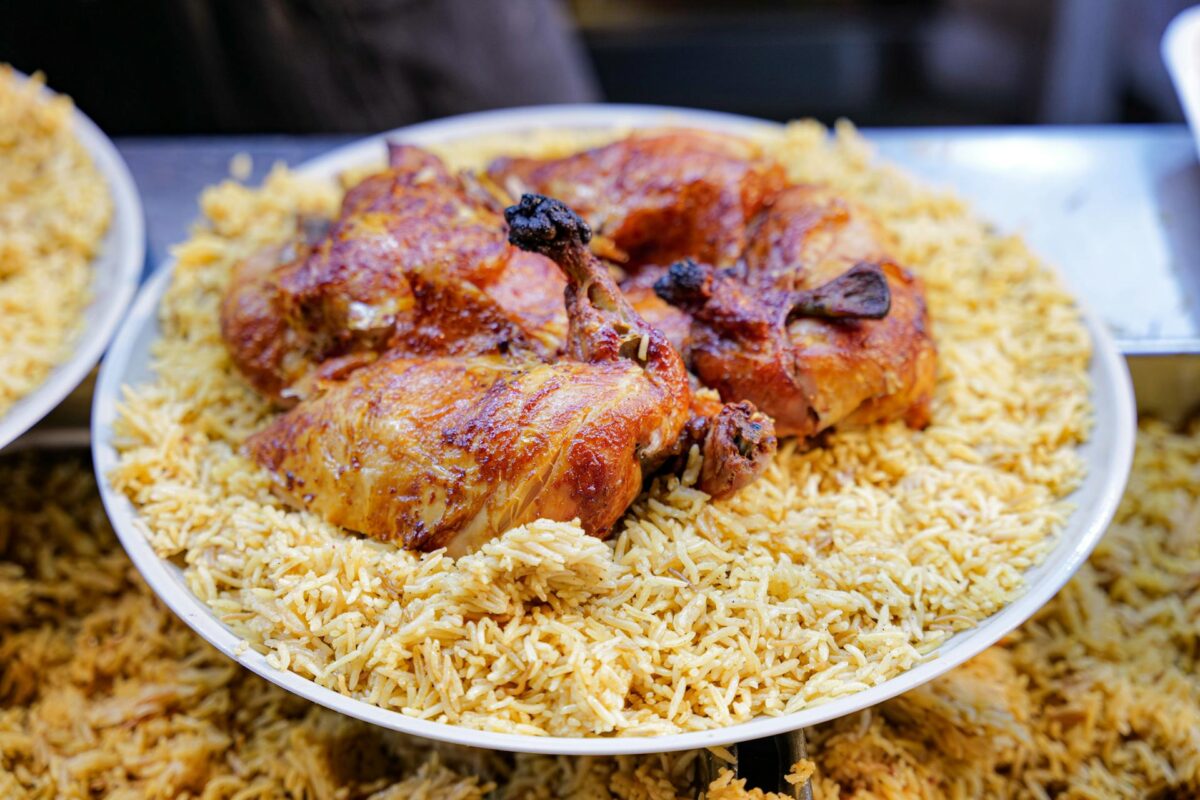
Chicken Biryani follows the same basic principles as other Biryanis but uses chicken as the primary protein. The chicken is marinated in a mixture of yogurt and spices, then layered with partially cooked rice and slow-cooked to perfection. The result is a harmonious blend of tender chicken, fragrant rice, and aromatic spices.

Cultural Significance and Global Popularity

Biryani, including Chicken Biryani, holds a special place in the cultural fabric of South Asia. It is a dish often reserved for celebrations, festivals, and family gatherings. Its versatility and adaptability have also contributed to its global appeal. Today, Biryani is enjoyed in various forms across the Middle East, Southeast Asia, and even Western countries, where it has been embraced by food enthusiasts and chefs alike.

In a Nutshell

The history of Biryani and Chicken Biryani is a fascinating journey through time, reflecting the rich cultural and culinary heritage of the Indian subcontinent. From its Persian roots to its regional adaptations, Biryani has become a symbol of unity in diversity. Chicken Biryani, in particular, has carved out a special niche, offering a delicious and accessible option for Biryani lovers worldwide. As the dish continues to evolve, it remains a testament to the enduring power of food to bring people together.

References

  1. Sen, Colleen Taylor. Feasts and Fasts: A History of Food in India. Reaktion Books, 2015.
  2. Achaya, K.T. Indian Food: A Historical Companion. Oxford University Press, 1994.
  3. Davidson, Alan. The Oxford Companion to Food. Oxford University Press, 2014.
  4. Thangam, Philip. The Biryani Book. Westland Publications, 2019.
  5. Jaffrey, Madhur. Madhur Jaffrey’s Ultimate Curry Bible. Ebury Press, 2003.

Image Credit : Photo by Anthony Rahayel

The Art of Menu Design: How to Influence Customer Choices

In the competitive world of hospitality and dining, a well-crafted menu is more than just a list of dishes—it’s a powerful tool that can shape customer decisions, enhance satisfaction, and boost profitability. The art of menu design goes beyond aesthetics; it involves a deep understanding of psychology, strategic pricing, and thoughtful item placement. By leveraging these elements, restaurateurs can subtly guide customers toward specific choices, creating a win-win scenario for both the diner and the business.

The Psychology Behind Menu Layout

The way a menu is structured plays a significant role in how customers perceive and interact with it. Research in consumer psychology reveals that people don’t read menus linearly; instead, their eyes are drawn to specific areas, often following predictable patterns. Here’s how to use this knowledge to your advantage:

  1. The Golden Triangle: Studies show that customers’ eyes typically move to the center of the menu first, then to the top-right corner, and finally to the top-left corner. This pattern forms a “golden triangle” of attention. Placing high-margin or signature dishes in these areas increases the likelihood of them being ordered.
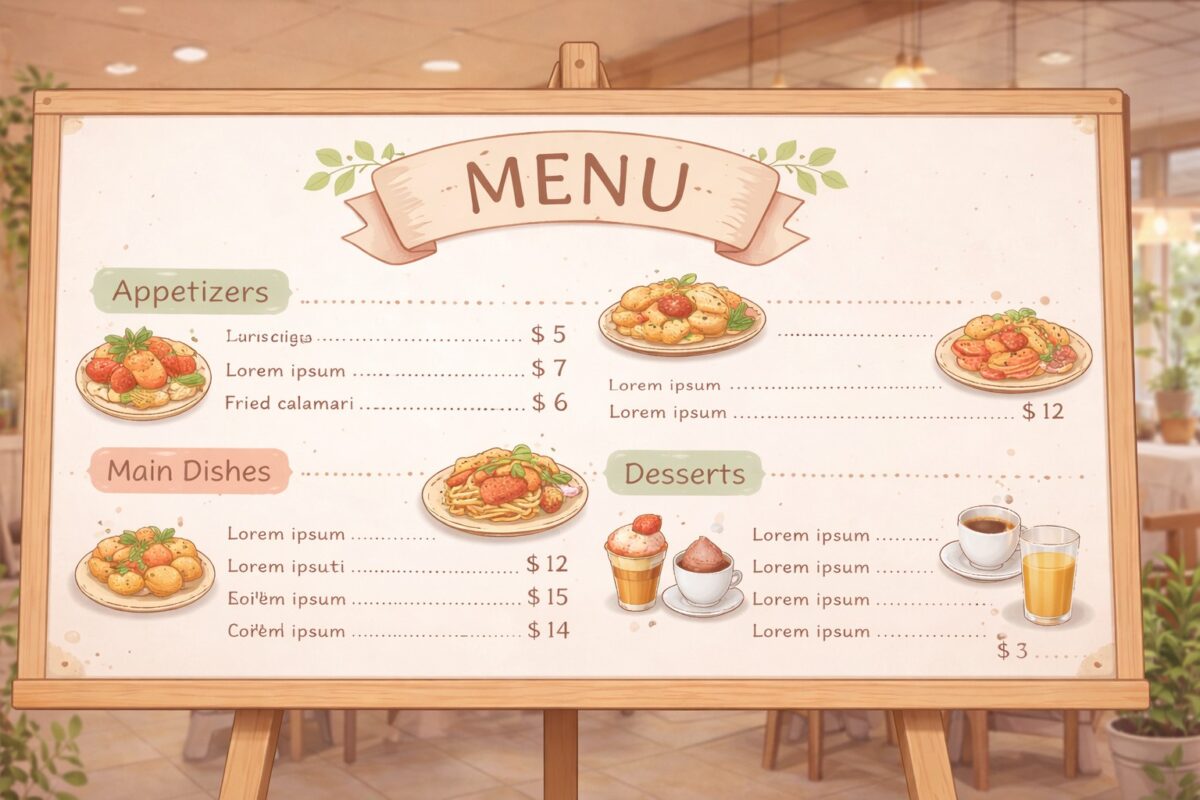
  2. Visual Hierarchy: Use design elements like boxes, bold fonts, or icons to highlight specific items. For example, enclosing a dish in a box or adding a star next to it draws attention and signals that it’s a special or recommended choice.
  3. Menu Length: Too many options can overwhelm customers, leading to decision fatigue. A concise menu not only makes it easier for diners to choose but also allows the kitchen to maintain quality and consistency.
  4. Descriptive Language: The way a dish is described can significantly influence its appeal. Words like “handcrafted,” “slow-roasted,” or “farm-fresh” evoke sensory experiences and create an emotional connection, making the dish more enticing.

Pricing Strategies That Work

Pricing is more than just a numbers game; it’s a psychological tool that can influence how customers perceive value. Here are some effective pricing strategies:

  1. The Decoy Effect: Placing a higher-priced item next to a slightly less expensive but similarly desirable option can make the latter seem like a better deal. For example, a $50 steak next to a $45 steak makes the $45 option appear more reasonable.
  2. Charm Pricing: Ending prices with .95 or .99 instead of rounding them up (e.g., $9.95 instead of $10) creates the illusion of a lower price. This subtle trick can make a dish seem more affordable.
  3. Anchoring: Listing a high-priced item at the top of a category can make the other options seem more reasonably priced in comparison. For instance, a $100 bottle of wine makes a $50 bottle appear more affordable.
  4. Bundling: Offering combo meals or pairing suggestions can increase the perceived value and encourage customers to spend more. For example, a burger, fries, and drink combo priced slightly lower than the individual items can drive sales.

Strategic Item Placement

Where items are placed on the menu can significantly impact what customers order. Here’s how to use placement to your advantage:

  1. Prime Real Estate: As mentioned earlier, the center, top-right, and top-left areas of the menu are the most noticed. Use these spots for high-margin items or dishes you want to promote.
  2. Category Order: The order in which categories appear can influence choices. For example, listing appetizers or drinks first can encourage customers to start with these items, increasing overall spending.
  3. The Power of the First and Last: People tend to remember the first and last items in a list more than those in the middle. Place your most profitable or popular dishes at the beginning or end of a category to capitalize on this effect.
  4. Grouping by Theme: Grouping items by theme (e.g., “Chef’s Specials” or “Local Favorites”) can create a sense of exclusivity and encourage customers to explore these sections.

The Role of Design and Imagery

While the content of the menu is crucial, its design and visual appeal also play a significant role in influencing customer choices. A cluttered or poorly designed menu can be off-putting, while a clean, visually appealing one can enhance the dining experience. Consider the following:

  1. Typography: Use fonts that are easy to read and align with your restaurant’s brand. Avoid using too many font styles, as this can create visual chaos.
  2. Color Psychology: Colors evoke emotions and can influence appetite. For example, red is known to stimulate appetite, while green is associated with freshness and health. Use colors strategically to reinforce your brand and highlight key items.
  3. Imagery: High-quality images of dishes can entice customers, but use them sparingly. Too many images can make the menu look cheap or overwhelming.

In a Nutshell

The art of menu design is a blend of psychology, strategy, and creativity. By understanding how customers interact with menus and using techniques like strategic layout, pricing psychology, and thoughtful item placement, restaurateurs can subtly guide customer choices while enhancing their dining experience. A well-designed menu not only drives profitability but also reinforces the restaurant’s brand and leaves a lasting impression on diners. In the end, a menu is more than just a list—it’s a carefully crafted tool that can turn first-time visitors into loyal patrons.

References

Kimes, S. E., & Robson, S. K. A. (2004).
The Impact of Restaurant Table Characteristics on Meal Duration and Spending. Cornell Hotel and Restaurant Administration Quarterly, 45(4), 333–346.

  • This study explores how menu design and table layout influence customer behavior, including spending patterns and meal duration.

Yang, S. S., & Kimes, S. E. (2008).
Customer Perceptions of Menu Variety and Menu Layout in Restaurants. Cornell Hospitality Quarterly, 49(4), 438–454.

  • This research examines how menu variety and layout affect customer perceptions and decision-making.

Ariely, D. (2008).
Predictably Irrational: The Hidden Forces That Shape Our Decisions. HarperCollins.

  • Dan Ariely’s book delves into behavioral economics, including the decoy effect and anchoring, which are key concepts in menu pricing strategies.

Wansink, B., Painter, J. E., & van Ittersum, K. (2001).
Descriptive Menu Labels’ Effect on Sales. Cornell Hotel and Restaurant Administration Quarterly, 42(6), 68–72.

  • This study highlights how descriptive language on menus can increase sales by making dishes more appealing.

Image Credit : Photo by Terje Sollie

How to Position and Make Your Restaurant the Most Favored Food Destination

How to Position and Make Your Restaurant the Most Favored Food Destination

In today’s competitive culinary landscape, standing out as a restaurant is no easy feat. With countless dining options available, customers are increasingly selective about where they spend their time and money. To position your restaurant as the most favored food destination, you need a combination of strategic planning, exceptional service, and a unique value proposition. This article explores actionable steps to help your restaurant rise above the competition and become a go-to dining spot.

1. Define Your Unique Selling Proposition (USP)

Your restaurant’s USP is what sets it apart from others. It could be your signature dish, a unique dining experience, or a specific theme. For example, restaurants like Noma in Copenhagen have built their reputation on innovative Nordic cuisine and foraging techniques, while In-N-Out Burger thrives on its simplicity and consistency.

  • Actionable Tip: Identify what makes your restaurant special. Is it your farm-to-table ingredients, a family recipe, or a cultural fusion menu? Highlight this in your branding and marketing efforts.

2. Focus on Exceptional Customer Experience

A study by Harvard Business Review found that improving customer experience can increase revenue by 5-10%. From the moment customers walk in, every interaction should be memorable. This includes friendly service, a clean and inviting ambiance, and prompt attention to customer needs.

  • Actionable Tip: Train your staff to go above and beyond. Personal touches, like remembering regular customers’ names or preferences, can create a loyal customer base.

3. Leverage Social Media and Online Presence

In the digital age, a strong online presence is crucial. According to Statista, 45% of diners research restaurants online before dining out. Platforms like Instagram, TikTok, and Facebook allow you to showcase your food, ambiance, and customer experiences visually.

  • Actionable Tip: Post high-quality photos and videos of your dishes, behind-the-scenes content, and customer testimonials. Engage with your audience by responding to comments and messages promptly.

4. Offer a Memorable Menu

Your menu is the heart of your restaurant. A well-curated menu that balances creativity, quality, and affordability can leave a lasting impression. Consider seasonal ingredients, dietary preferences (e.g., vegan, gluten-free), and local flavors to appeal to a broader audience.

  • Actionable Tip: Regularly update your menu to keep it fresh and exciting. Highlight your best-selling dishes and create limited-time offers to encourage repeat visits.

5. Create a Strong Brand Identity

Your brand is more than just your logo; it’s the story you tell and the emotions you evoke. Successful restaurants like McDonald’s and Starbucks have built global empires by creating a consistent and recognizable brand.

  • Actionable Tip: Develop a cohesive brand identity, including your logo, color scheme, and tone of voice. Ensure this identity is reflected in your decor, packaging, and marketing materials.

6. Encourage Word-of-Mouth Marketing

Word-of-mouth remains one of the most powerful marketing tools. According to Nielsen, 92% of consumers trust recommendations from friends and family over traditional advertising.

  • Actionable Tip: Encourage satisfied customers to leave reviews on platforms like Google, Yelp, and TripAdvisor. Offer incentives, such as discounts or free desserts, for referrals.

7. Host Events and Collaborations

Events like live music nights, cooking classes, or chef’s table experiences can attract new customers and create buzz. Collaborating with local businesses or influencers can also expand your reach.

  • Actionable Tip: Partner with local breweries, wineries, or artists to host unique events that align with your brand.

8. Prioritize Consistency

Consistency is key to building trust and loyalty. Whether it’s the quality of your food, the speed of service, or the cleanliness of your restaurant, customers should know what to expect every time they visit.

  • Actionable Tip: Implement standard operating procedures (SOPs) to ensure consistency across all aspects of your restaurant.

9. Engage with the Community

Being an active part of your local community can enhance your restaurant’s reputation. Sponsor local events, participate in charity drives, or source ingredients from local farmers.

  • Actionable Tip: Build relationships with other local businesses and organizations to create a network of support and mutual promotion.

10. Monitor and Adapt

The restaurant industry is constantly evolving. Regularly analyze customer feedback, sales data, and industry trends to identify areas for improvement.

  • Actionable Tip: Use tools like Google Analytics and customer surveys to gather insights and make data-driven decisions.

In a Nutshell

Positioning your restaurant as the most favored food destination requires a combination of creativity, consistency, and customer-centric strategies. By defining your USP, leveraging digital platforms, and delivering exceptional experiences, you can create a dining destination that customers will rave about and return to time and time again. Remember, success in the restaurant industry is not just about great food—it’s about creating memorable moments that keep customers coming back for more.

References

  1. Harvard Business Review. (2014). “The Value of Customer Experience, Quantified.”
  2. Statista. (2023). “Online Restaurant Research Statistics.”
  3. Nielsen. (2015). “Global Trust in Advertising Report.”
  4. Noma. (2023). “About Us.” Retrieved from noma.dk
  5. In-N-Out Burger. (2023). “Our Story.” Retrieved from in-n-out.com

By implementing these strategies, your restaurant can carve out a unique space in the market and become the most favored food destination in your area.

Image Credit : Image by Paul Henri Degrande from Pixabay

The Timeless Elixir: Green Tea

Green tea, often referred to as the “elixir of life,” has been cherished for centuries for its delicate flavor, health benefits, and cultural significance. From its ancient origins in China to its global popularity today, green tea has become a staple in many households. This article delves into the history of green tea, provides a simple recipe, and explores its numerous health benefits.

A Brief History of Green Tea

Green tea’s origins can be traced back over 4,000 years to ancient China, where it was initially consumed for its medicinal properties. Legend has it that Emperor Shen Nong, a renowned herbalist, discovered green tea when tea leaves accidentally fell into his pot of boiling water. Intrigued by the refreshing aroma and taste, he began to promote its consumption.

During the Tang Dynasty (618–907 AD), green tea became a popular beverage, and its cultivation and preparation methods were refined. By the 12th century, green tea had spread to Japan, where it became an integral part of Japanese culture, particularly in the form of matcha, a powdered green tea used in traditional tea ceremonies.

Today, green tea is enjoyed worldwide, with countries like China, Japan, India, and Sri Lanka being major producers. Its enduring popularity is a testament to its versatility and health-promoting properties.

How to Make Green Tea: A Simple Recipe

Making green tea is an art that requires attention to detail to preserve its delicate flavor and nutrients. Here’s a step-by-step guide to brewing the perfect cup:

Ingredients:

  • 1 teaspoon of green tea leaves (or 1 green tea bag)
  • 1 cup of water (filtered or spring water is ideal)
  • Optional: honey, lemon, or mint for added flavor

Instructions:

  1. Heat the Water: Bring water to a temperature of about 160–180°F (70–80°C). Avoid boiling water, as it can scorch the tea leaves and result in a bitter taste.
  2. Steep the Tea: Place the green tea leaves or tea bag in a cup or teapot. Pour the hot water over the leaves and let them steep for 2–3 minutes. Steeping for too long can make the tea bitter.
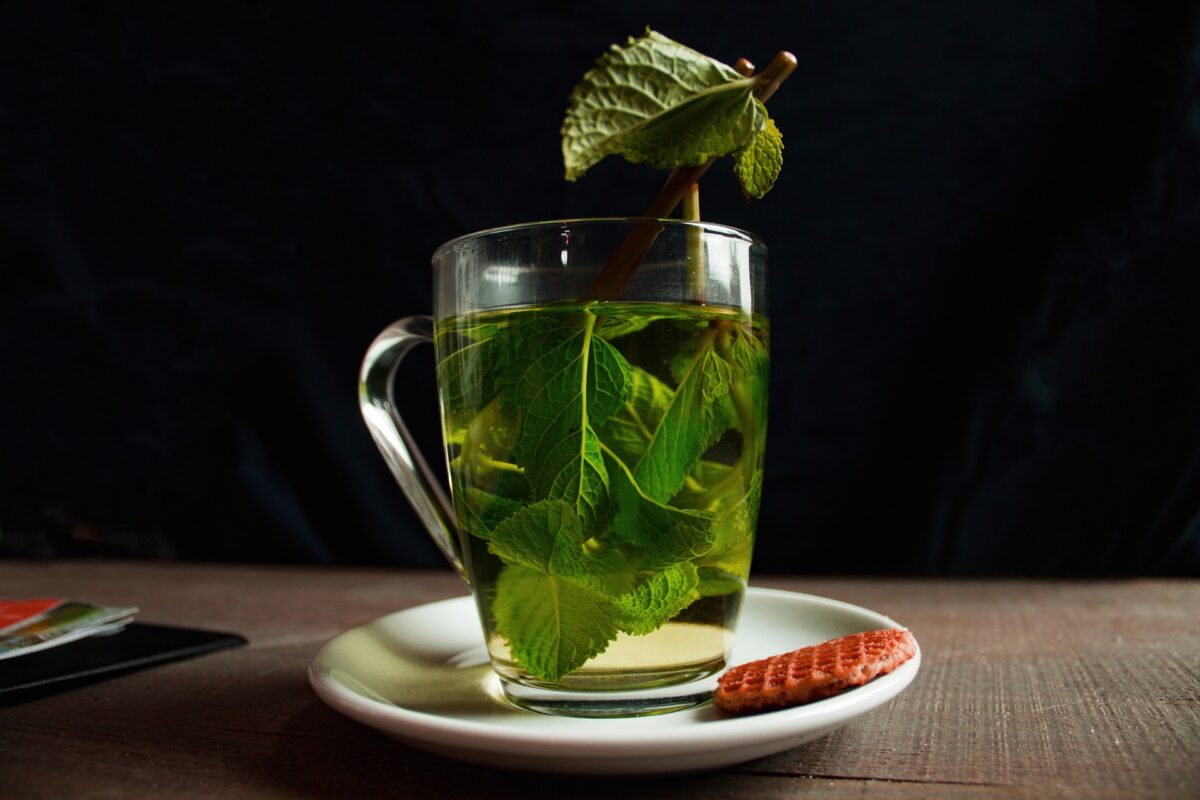
  3. Strain and Serve: If using loose leaves, strain the tea into a cup. Add honey, lemon, or mint if desired.
  4. Enjoy: Sip slowly and savor the subtle flavors and aromas.

Health Benefits of Green Tea

Green tea is more than just a refreshing beverage; it is packed with antioxidants and nutrients that offer a wide range of health benefits. Here are some of the most notable:

  1. Rich in Antioxidants: Green tea is loaded with polyphenols, particularly catechins, which help combat oxidative stress and reduce inflammation in the body.
  2. Boosts Brain Function: The caffeine and amino acid L-theanine in green tea work together to improve focus, alertness, and cognitive performance.
  3. Supports Heart Health: Regular consumption of green tea has been linked to lower levels of LDL cholesterol and improved blood vessel function, reducing the risk of heart disease.
  4. Aids in Weight Management: Green tea can boost metabolism and increase fat burning, making it a popular choice for those looking to manage their weight.
  5. Promotes Skin Health: The antioxidants in green tea help protect the skin from damage caused by free radicals and UV radiation, promoting a healthy complexion.
  6. May Reduce Cancer Risk: Some studies suggest that the polyphenols in green tea may help inhibit the growth of cancer cells, though more research is needed in this area.
  7. Improves Dental Health: The catechins in green tea have antibacterial properties that can help reduce the risk of cavities and bad breath.

In a Nutshell

Green tea is a timeless beverage that bridges the gap between ancient tradition and modern wellness. Its rich history, simple preparation, and myriad health benefits make it a valuable addition to any lifestyle. Whether you enjoy it for its calming effects, its subtle flavors, or its health-promoting properties, green tea is truly a gift from nature. So, the next time you brew a cup, take a moment to appreciate the centuries of culture and care that have gone into every sip. Cheers to your health!

Image Credit : Image by Moritz Liebert from Pixabay

How Restaurants Play a Central Role in the World of Dating

Dating is a timeless ritual, a dance of connection and discovery that has evolved over centuries. While the ways we meet potential partners have changed—from arranged marriages to swiping right on dating apps—one constant remains: restaurants have long been a cornerstone of the dating experience. From first dates to anniversaries, restaurants provide the perfect setting for romance to blossom. But why do restaurants hold such a central role in the world of dating? The answer lies in their unique ability to combine ambiance, nourishment, and shared experiences into a single, memorable event.

The Power of Atmosphere

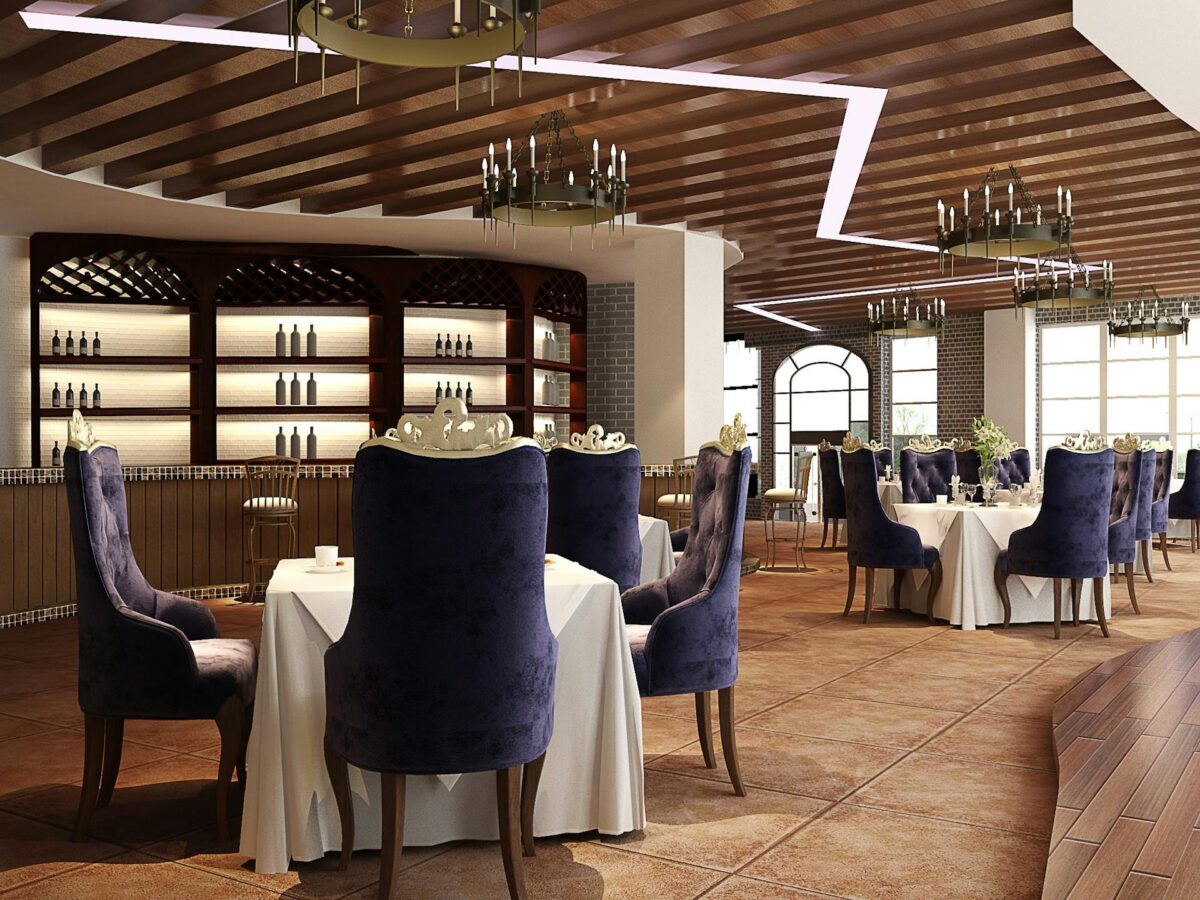
Restaurants are designed to create an inviting and intimate atmosphere, making them ideal for dating. Soft lighting, cozy seating, and carefully curated music all contribute to an environment that encourages conversation and connection. Whether it’s a candlelit table at a fine dining establishment or a casual booth at a neighborhood bistro, the ambiance of a restaurant sets the stage for romance. The effort put into choosing the right restaurant—whether it’s a trendy spot or a hidden gem—also signals thoughtfulness and consideration, qualities that are highly valued in the early stages of dating.

Food as a Shared Experience

Food has a unique way of bringing people together. Sharing a meal is an inherently social activity, and restaurants provide a neutral, comfortable space for couples to bond over their culinary preferences. Trying new dishes, discussing flavors, and even feeding each other bites of dessert can create moments of intimacy and playfulness. For many, food is also a way to express culture, identity, and passion, making it a powerful tool for connection. A well-chosen restaurant can serve as a conversation starter, offering insights into each other’s tastes and personalities.

The Ritual of Dining Out

Dining out is more than just eating; it’s a ritual that carries symbolic meaning in the context of dating. Going to a restaurant signifies a deliberate effort to spend quality time together, away from the distractions of everyday life. It’s a chance to dress up, impress, and show appreciation for one another. The act of sitting across from someone, engaging in meaningful conversation, and sharing a meal fosters a sense of closeness that is hard to replicate in other settings. For many couples, restaurants become the backdrop for milestone moments, from first dates to marriage proposals.

A Safe and Structured Environment

For those navigating the often-awkward terrain of early dating, restaurants offer a safe and structured environment. Unlike more casual meetups, a restaurant date has a clear beginning, middle, and end, which can help ease nerves and provide a sense of direction. The presence of waitstaff and other diners also creates a sense of security, making it easier to relax and focus on getting to know each other. Additionally, the act of splitting the bill or treating each other to a meal can serve as a subtle way to gauge compatibility and mutual respect.

Restaurants as a Reflection of Compatibility

The choice of restaurant can reveal a lot about a couple’s compatibility. Are they drawn to the same types of cuisine? Do they prefer upscale dining or casual eateries? These preferences can offer clues about shared values, lifestyles, and priorities. For example, a couple who bonds over a love of hole-in-the-wall ethnic restaurants may discover a shared sense of adventure, while those who frequent farm-to-table establishments might find common ground in their commitment to sustainability. Over time, the restaurants a couple visits together can become a map of their relationship, marking the places where they laughed, celebrated, and grew closer.

The Role of Restaurants in Modern Dating

In today’s fast-paced, digital-first world, restaurants continue to play a vital role in dating. While apps and online platforms have transformed how people meet, the first date often still takes place over a meal. Restaurants provide a tangible, real-world space where virtual connections can be tested and deepened. They also offer a welcome break from the endless cycle of texting and video calls, allowing couples to experience each other’s company in a more meaningful way.

Moreover, restaurants have adapted to the changing needs of modern daters. Many now offer private dining options, themed experiences, and interactive elements like chef’s tables or cooking classes, which can add an extra layer of excitement to a date. For those who prefer a more low-key approach, the rise of food halls and casual dining spots has made it easier than ever to enjoy a relaxed, pressure-free meal together.

Final Thought

Restaurants are more than just places to eat—they are stages for romance, connection, and shared experiences. Their ability to combine ambiance, nourishment, and ritual makes them an indispensable part of the dating world. Whether it’s a first date or a fiftieth anniversary, the act of dining out allows couples to slow down, savor the moment, and create lasting memories. In a world where so much of our lives are lived online, restaurants remind us of the joy and intimacy that can be found in sharing a meal face-to-face. So the next time you’re planning a date, remember: the right restaurant can be the key to unlocking a world of romance.

Image Credit : Photo by Katerina Holmes